
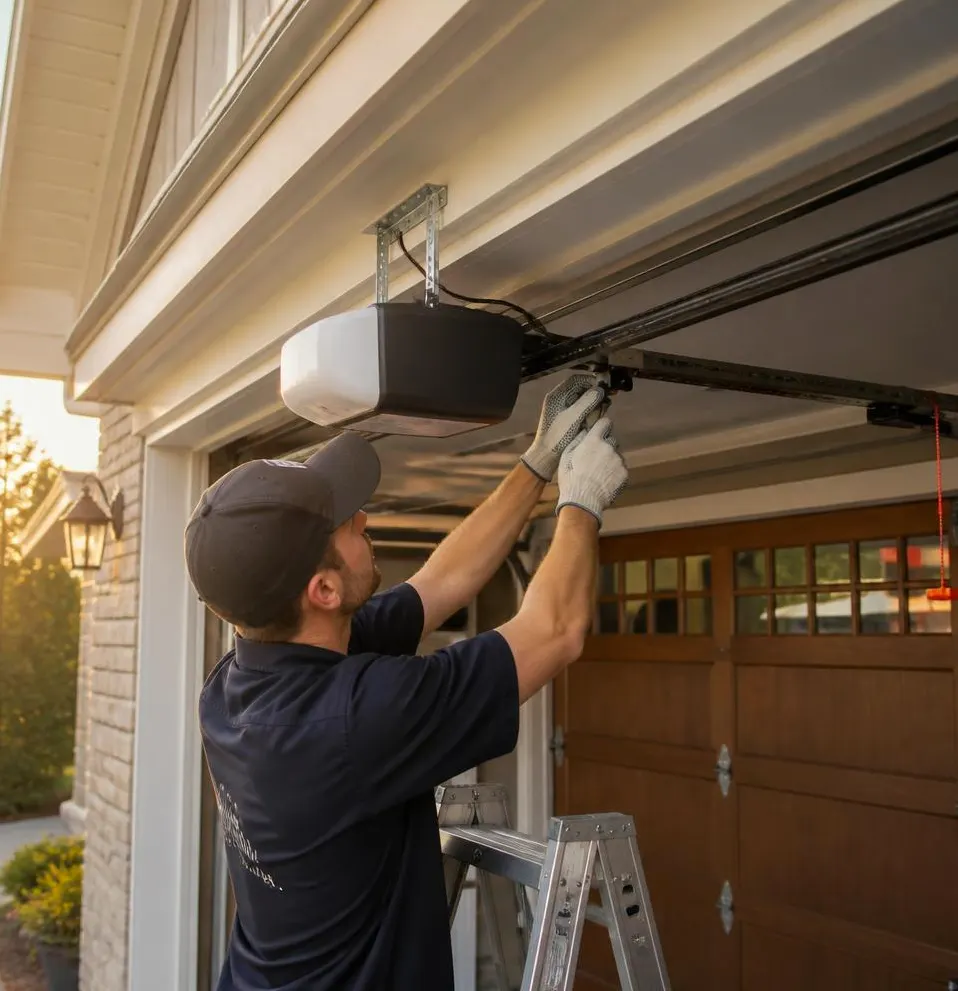
Short answer: pull the red emergency release cord hanging from the trolley to disconnect the door from the opener, then lift or lower the door by hand using slow, steady pressure. Once power is back, pull the door all the way down, reconnect the trolley to the release cord, and run the opener through a full open-close cycle to confirm it's tracking correctly.
That's the short version. Here's what actually happens at each step, what tools you need, and where to stop and call someone if things don't go the way they should.
Why This Comes Up So Often Around Here
Hurricane season brings regular power blips to Lake County, and afternoon downpours knock out transformers more than most homeowners expect. A dead opener in the middle of a storm, with a car trapped inside or outside, is one of the more common calls we get. Knowing the manual release process ahead of time — before you're standing in the dark with a flashlight — makes the whole thing a lot less stressful.
Tools You'll Need
- A sturdy step stool (the release cord is usually just out of reach for most adults)
- A flashlight or headlamp if it's dark or the garage has no windows
- Work gloves (helpful if the door has been sitting in humid air and the track has any surface rust)
- Nothing else — this is a no-tool, no-wiring job for the homeowner steps below
Step-by-Step: Disengaging the Opener
- Locate the emergency release cord. It's the red handle hanging from a mechanism (the trolley) that rides along the opener's rail, usually a foot or two in front of the motor unit.
- Make sure the door is fully closed or fully open before you pull it. Disengaging mid-travel can cause the door to drop suddenly, especially if a spring is already weak — this is where injuries happen.
- Pull the cord straight down and toward the back of the garage. You'll hear or feel a click as the trolley disconnects from the opener's drive mechanism. The door is now a manual door, moving independently of the motor.
Step-by-Step: Opening or Closing by Hand
- Grip the door by the bottom handle or bracket, not the panels. Panels can flex, especially if they've absorbed moisture from months of humidity, and an uneven grip puts stress on one side.
- Lift or lower in one smooth motion. A properly balanced door should move with moderate, even effort — it shouldn't feel like dead weight, and it shouldn't want to slam down or fly up on its own. If it does either of those things, stop. That's a spring tension problem, not a power problem, and it's not safe to keep forcing it.
- Once the door is in position, leave the release cord disengaged if you expect the outage to continue. This lets you open and close as many times as you need without the opener being part of the equation.
Step-by-Step: Re-Engaging the Opener After Power Returns
- Close the door completely by hand first. Reconnecting the trolley while the door is partway open can cause it to bind or travel unevenly the first time the motor runs.
- Pull the release cord again, this time toward the motor, or follow the reconnect motion specific to your opener model. Most trolleys snap back into the drive carriage with a firm push or by running the opener briefly — check your opener's label or manual if you're unsure, since a few brands reverse the pull direction.
- Press the wall button or remote to run the door through one full cycle. Watch the full travel — it should open smoothly, stop cleanly at the top, and reverse on the way down the same way it always has.
- Listen for anything unfamiliar. A grinding sound, a stutter partway through travel, or the door stopping short of fully closing usually means the limit settings got knocked out of sync during the manual cycles, or that moisture swelled the door slightly while it sat disengaged during a storm.
What's Fine for a Homeowner vs. What Needs a Technician
Pulling the release cord, moving the door by hand, and reconnecting the trolley are all normal homeowner tasks — no special skill required, just the steps above and a bit of caution.
What's not a homeowner job: anything involving the torsion or extension springs themselves, re-tensioning a door that drops or shoots up on its own, realigning bent track, or troubleshooting an opener that runs but won't properly reconnect to the trolley. Springs are under heavy load even when the door looks still, and a door that's out of balance can injure someone who doesn't know what they're dealing with.
When to Call Altoona Garage Door Experts
If the door felt heavy, uneven, or like it wanted to drop on its own during the manual steps, that's a spring doing less work than it should — our garage door spring repair service handles that safely with the right tension tools, not a ladder and good intentions. If the opener reconnected but the door won't track straight, stutters, or reverses when it shouldn't, that often points to a track or sensor issue that's worth a proper garage door opener installation inspection, especially on older units that have been through a few storm seasons of humidity and power surges.
If your next outage leaves you stuck with a door that won't behave even after following these steps, give Altoona Garage Door Experts a call. We serve Altoona, Umatilla, Eustis, Mount Dora, Tavares, Leesburg, Paisley, and Grand Island, and we'll get your door moving — and staying balanced — before the next storm rolls through.