
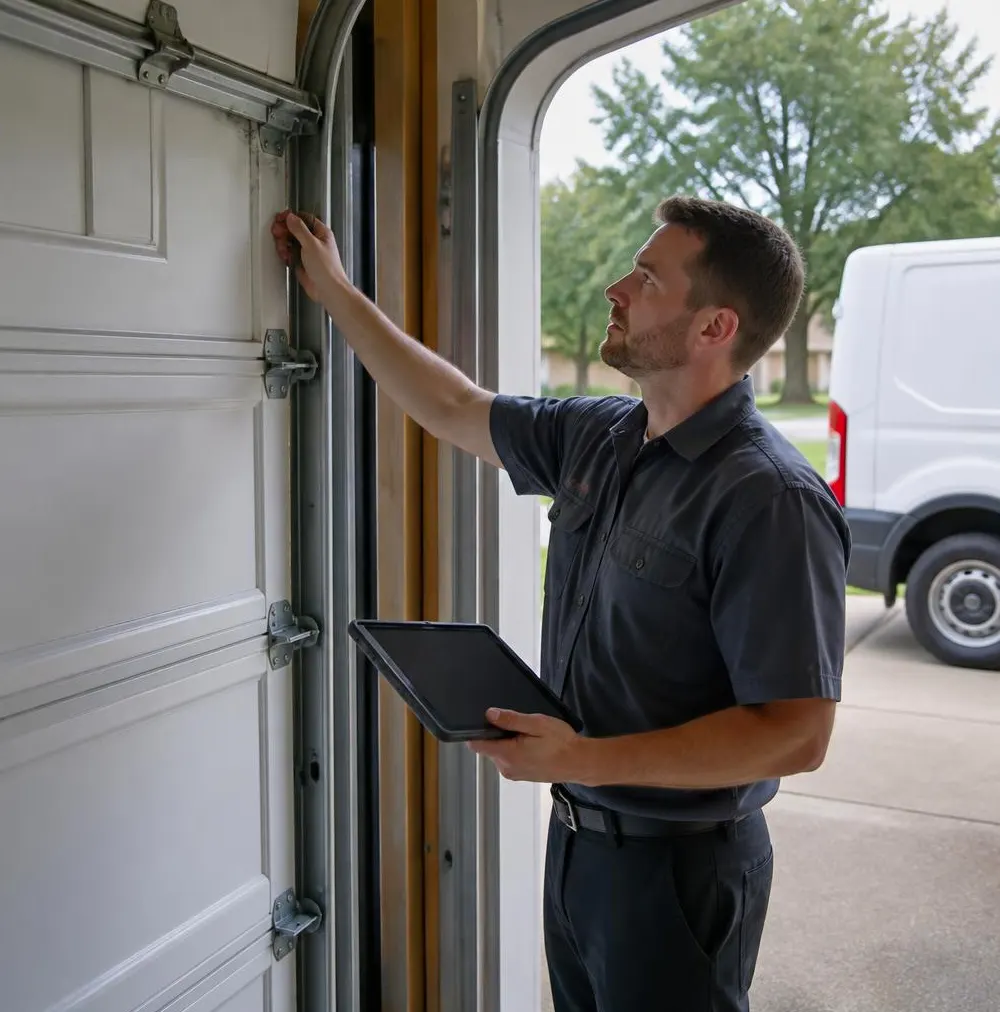
The Short Answer
Most dents are cosmetic. If the ding is small, shallow, and the door still opens, closes, and seals flush with the floor, you're looking at an eyesore, not a safety issue. But if the dent is near a hinge, a track, or a panel seam — or if the door struggles, scrapes, or won't sit flush anymore — that's a different story. That dent may have bent the panel's structure, and it needs attention before the next big storm, not after.
Why This Argument Keeps Happening
One spouse sees a dent and wants it fixed immediately. The other sees the door still working fine and doesn't want to spend the money. Both of you are partly right — it depends entirely on where the dent is and what it did to the metal underneath, not just how it looks from the driveway.
Dents That Are Just Cosmetic
- Location: Flat field of a panel, away from hinges, rollers, or seams.
- Size: Small and shallow — think shopping cart or ladder bump, not a car backing into it.
- Door behavior: Opens and closes smoothly, no new noises, no gaps at the bottom or sides.
These dents are annoying but not urgent. Steel panels can sometimes be pulled out with a suction-cup dent puller, similar to auto body work, though the paint may crack or need touch-up afterward. It won't look factory-new, but it'll stop being a conversation piece.
A Note on Humidity and Paint
In this part of Florida, humidity and afternoon downpours are hard on exposed metal edges. A dent that cracks the paint gives moisture a place to sit, and that can turn into a rust spot faster than it would in a drier climate. If you're going to leave a cosmetic dent alone, at least seal the paint crack with a matching touch-up so it doesn't become a bigger problem later.
Dents That Need a Closer Look
- Location: Near a hinge, near the track, or right on a panel seam where sections meet.
- Depth: Deep enough that you can see it's bent the metal, not just dinged the surface.
- Door behavior: Door hesitates, jerks, makes new grinding or popping sounds, or the opener seems to work harder than before.
A dent in these spots can throw off the track alignment or put uneven pressure on the rollers and cables. The door might still open today, but it's running outside its normal tolerances, and that tends to get worse, not better, especially once you add the wind load of a tropical system pushing against it.
When a Dent Is Actually Structural
This is the one that should end the argument in favor of calling someone. A dent is structural when it has:
- Bent or buckled the internal reinforcement (common on wider sections and double doors)
- Caused the panel to bow out of flat, so the door no longer meets the weatherstripping evenly
- Cracked or separated a seam between panel sections
- Pulled a hinge or roller bracket slightly out of position
None of this is always visible from six feet away. A dent can look modest and still have knocked a bracket a quarter-inch out of alignment, which is enough to make the door bind under its own springs. In hurricane season, that matters more than usual — garage doors here are rated to resist wind load as a connected system, and a structural dent can compromise that rating on just one panel, which weakens the whole door during a storm, not just the dented section.
A Quick Home Test
Before you call anyone, try this with the door closed:
- Look along the bottom edge for even contact with the floor — no daylight gaps on one side.
- Open and close the door once, listening for new grinding, popping, or hesitation at the dented section.
- Check the dent itself: press on it gently. If it flexes or feels loose rather than solid, that's a sign the backing structure is compromised.
If anything fails that test, treat it as structural until proven otherwise, not cosmetic.
When to Call Altoona Garage Door Experts
If the dent is near a hinge or track, if the door isn't sealing flush anymore, or if you hear new noise when it opens, that's the point to stop guessing. We'll inspect the panel and the surrounding hardware — hinges, rollers, track alignment — to see whether it's isolated to one section or affecting how the door moves as a whole. For a single damaged section on a sectional door, Garage Door Panel Replacement usually solves it without replacing the whole door. If the dent has knocked the door off its alignment, our Off Track Door Repair service gets it back on track and moving the way it should before storm season puts it to the test.
If you're in Altoona, Umatilla, Eustis, Mount Dora, Tavares, Leesburg, Paisley, or Grand Island and you're not sure whether that dent is a cosmetic fix or a real problem, give us a call. We'll look at it, tell you straight which one it is, and settle the argument for you.